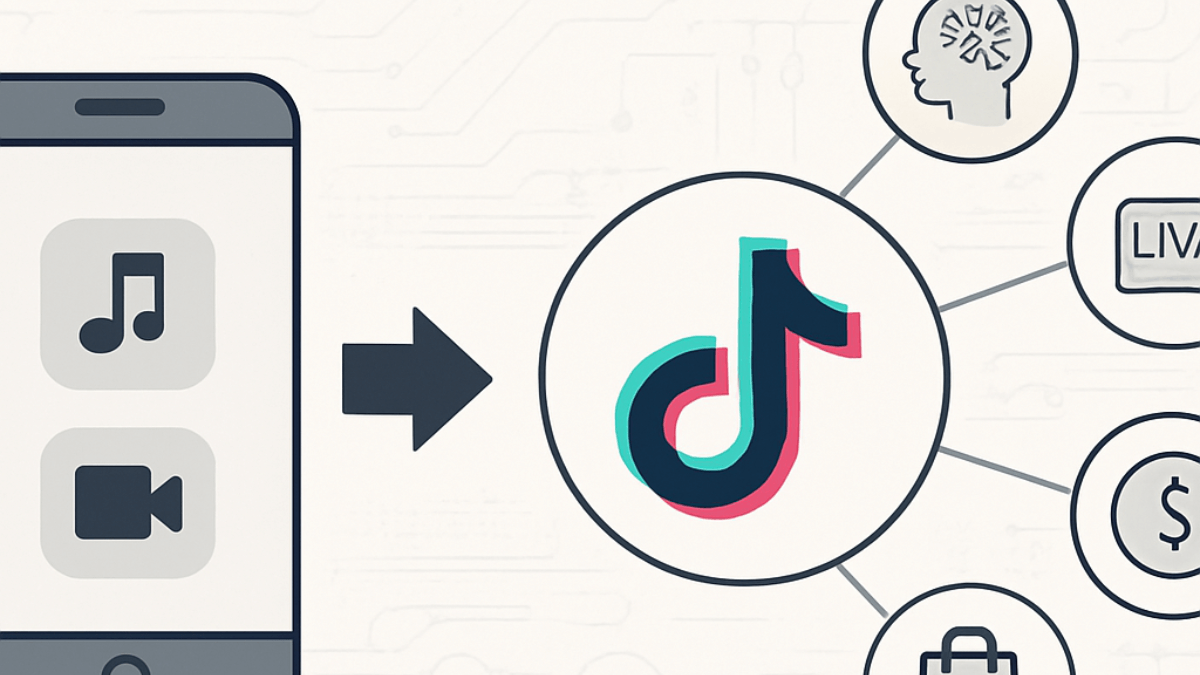
TikTok in 2026 is a fundamentally different platform from the one that existed in 2021 — and the gap is accelerating. Three numbers define the current reality: 40% of Gen Z now use TikTok as a primary search engine, 70% completion rate is now required for broad distribution (up from 50% in 2024), and 48 hours is how long new uploads are tested on your existing followers before wider distribution. Per TikTok's recommendation methodology, watch quality signals now decisively outweigh raw view counts as a distribution factor.
| Phase | Period | Core Rule | What TikTok Rewarded |
|---|---|---|---|
| Random Entertainment | 2018–2021 | Volume and spontaneity | Loop replay + likes and follows |
| Niche and Commerce | 2022–2024 | Specialisation and consistency | Niche accounts + TikTok Shop signals |
| Search and Depth | 2025–present | Depth and knowledge authority | Real dwell time + search value + saves over likes |
Key Takeaways
- The completion rate threshold for broad distribution rose to ~70% in 2025 — significantly higher than the ~50% that applied in 2024.
- "Qualified Views" (views lasting more than 5 seconds) are now the key metric — views where the viewer immediately scrolled past barely count.
- New posts are tested on your existing followers first for ~48 hours — your current audience quality now determines your new audience reach.
- Spoken keywords in your first 10 seconds carry the same SEO weight as written on-screen text — the algorithm "listens."
- TikTok doesn't officially disclose algorithm update details — but many creators consistently observe these patterns across 2025–2026.
If you're a TikTok creator who's noticed that tactics that worked in 2022 are producing weaker results today, you're not imagining it — the platform's algorithmic priorities have shifted substantially. This guide covers what changed, when it changed, and what to do about it. For building a content strategy that reflects the current phase, see our TikTok content strategy guide.
What Are the Three Historical Phases of TikTok's Development — and Where Are We Now?
Phase One (2018–2021) — The Random Entertainment Era
15-second clips, organic trending sounds, distribution that required no strategic thinking. Any spontaneous video could reach millions because competition was low and the platform desperately needed content. Likes and follows carried heavy algorithmic weight, and the FYP rewarded volume over depth.
Phase Two (2022–2024) — The Niche and Commerce Era
TikTok Shop launched, accounts began being classified by topic, randomness was penalised, and video length expanded to three minutes. The algorithm began favouring specialised accounts over scattered ones. Creators who built a clear niche in this period accumulated a competitive advantage that is now significantly harder to replicate from scratch.
Phase Three (2025–Present) — The Search and Depth Era
TikTok is now the primary search engine for a growing segment of younger users. AI language models scan every spoken word and every line of on-screen text, classifying content with precision that didn't exist before. The platform rewards longer, deeper content — and applies near-invisible distribution limits to low-effort content. "Qualified Views" (watches longer than 5 seconds) have become the key quality signal.
What Was the Decisive Algorithm Update That Changed TikTok's Core Rules?
The shift from measuring replay rate (loop count) to measuring actual cumulative dwell time is the single most consequential algorithmic change in TikTok's history. Before this update, seamless loop videos had their watch time artificially inflated every time the video recycled. After the update, the algorithm began measuring real seconds only.
| Phase | Observed Performance | The Reason |
|---|---|---|
| Before the update | 10–15 second seamless loop videos consistently reaching millions | Each loop replay was counted as a new view, mathematically inflating dwell time |
| Immediately after update | Views collapsed 60% and froze at 200–1,000 | Algorithm measures real seconds watched, not loops — short videos contribute very few actual seconds |
| After adapting | Average 150,000+ views per longer video | 60–90 second length + visual change every 1.8 seconds = genuinely higher real dwell time |
How Does the Current TikTok Platform Differ From TikTok in 2021?
| Feature | 2021 Approach (algorithmically retired) | 2026 Approach (what the platform now rewards) |
|---|---|---|
| Video length | 11–15 seconds with a seamless loop | 60–90 seconds with content that earns the watch |
| Keywords and hashtags | Random #fyp #foryou at the end of every caption | Keywords in spoken script + precise 3-line caption + corrected auto-captions |
| Primary algorithm signal | Loop replay + likes and follows | Qualified Views (5s+) + saves and shares (now outweigh likes) |
| Initial distribution | Directly to a new audience sample | Existing followers first (~48 hours), then broader distribution |
| SEO approach | Non-existent — no one searched on TikTok | Essential — spoken words, on-screen text, captions all indexed |
Why Has TikTok Become a Search Engine — and What Does That Mean for Creators?
Many creators now observe that a growing portion of their views comes from in-app search rather than the For You Page alone. Hootsuite's 2026 analysis reports that 84% of TikTok searches happen in the exploration phase, while multiple sources cite 40% of Gen Z preferring TikTok over Google for first-resort searches in categories like recipes, beauty, tech tips, and travel.
The practical implications for creators:
- Your spoken script is now indexable text: TikTok's AI transcribes every clearly spoken word — say the keyword out loud in the first 10 seconds, don't rely only on writing it
- On-screen text doubles the signal: say the keyword and write it on screen simultaneously — two signals to one classification system at the same moment
- Your caption is now SEO: the first two lines appear in in-app search results — make them a precise, keyword-rich description, not an emotional one-liner
- Fix your auto-captions: editing TikTok's auto-generated transcript to correct misheard words consistently lifts reach by 30–60% on otherwise comparable videos
What Are the Most Important TikTok Algorithm Changes in 2025–2026?
TikTok doesn't officially disclose algorithm update details — but many creators and researchers consistently observe these patterns (see also TikTok's official analytics documentation):
- September 2025 — Original content update: content originality heavily favoured; engagement bait tactics explicitly penalised; AI detection scanning for unique visuals and editing patterns
- 2025 — Follower-first testing: new uploads distributed to existing followers first for approximately 48 hours before reaching non-followers — a significant structural change
- 2025 — Completion rate bar raised: broad distribution now requires ~70% completion (up from ~50% in 2024) according to multiple creator analyses
- 2025 — Saves and shares now outweigh likes: deeper engagement signals were reweighted above surface-level reactions
- October 2025 — AI Outline tool launched: official TikTok tool generating content scripts from high-search topics — an explicit algorithmic signal that search intent and content creation are now linked
- 2026 — Follower engagement at the centre: Sprout Social's 2026 algorithm analysis notes that the engagement threshold at 15–20 seconds is now a critical distribution checkpoint before the algorithm promotes content to wider audiences
How Do You Recalibrate Your Content for the Current TikTok Phase?
Practical adaptation steps for the current phase
- Extend videos to 60–90 seconds with intensive editing — a visual change every 1.5–2 seconds prevents audience drift before you deliver core value
- Say your keyword out loud in the first 10 seconds while writing it on screen simultaneously — double the classification signal
- Write descriptive captions: first two lines for search results, not emotional phrases — the algorithm classifies your video partly based on caption text
- Edit your auto-captions after posting — fix every misheard word to ensure your indexable transcript matches what you intended to say
- Build content around specific searchable questions — "how to…" or "what is the difference between…" generates sustained search-driven views beyond the initial FYP push
For building a complete content strategy reflecting this phase, see our TikTok content strategy guide. For ideal video lengths with supporting data, see our TikTok video length guide. And for building the personal brand that anchors your authority in the current phase, see our TikTok personal branding guide.
Can an Old Scattered Account Be Rescued in the Current Algorithm?
Yes — but with realistic expectations. In 2026, rebuilding reach after a dormant period or a scattered content history takes months, not weeks. Many creators report that accounts can "go dormant and come back viral" was true in 2021; in 2026, reach levels can take months to rebuild after inactivity.
Account rescue protocol
- Choose one specific niche and write 10 content ideas within it before posting anything
- Set all old scattered videos to "Only Me" — do not delete them
- Post consistently (3–5 videos per week) in the new niche only
- Actively engage with every comment in the first two hours of each post
- Wait 4–8 weeks before evaluating — the algorithm needs this time to reclassify the account by topic
For reading the analytics signals that indicate your account's classification is changing, see our TikTok analytics guide. For understanding shadowban effects that can affect scattered accounts, see our TikTok shadowban guide.
What Separates a Successful Creator in the Current TikTok Phase?
The creator who wins on TikTok in 2026 thinks about every video as an answer to a question someone is actively searching for — not as a clip they want to go viral. That shift in thinking changes the script, the caption, the length, and the editing approach all at once.
For the content types that perform best in this phase, see our successful TikTok content types guide. For your complete content framework, see our TikTok content guide.
What Do Creators Ask About TikTok Platform Evolution?
Are 15-second TikTok videos dead in 2026?
Not entirely dead — but their algorithmic weight has dropped significantly. The completion rate bar for broad distribution rose to ~70% in 2025. Short entertainment videos with extremely strong hooks can still spread, but the most powerful distribution channel now favours 60–90 second videos with genuinely valuable content.
Has TikTok actually become a search engine?
Yes — 40% of Gen Z use it as a primary search tool, and 84% of TikTok searches happen in the exploration phase. In categories like recipes, beauty, and travel it leads over Google for younger users. It does not yet compete with Google for professional or long-form informational searches.
Does TikTok listen to and index what you say in your videos?
Yes — speech-to-text technology transcribes every clearly spoken word. Spoken keywords in the first 10 seconds carry the same classification weight as on-screen text. Editing auto-generated captions to fix misheard words lifts reach 30–60% on comparable videos.
Can an old scattered TikTok account be rescued in the current algorithm?
Yes, but it requires 4–8 weeks minimum. Set old scattered videos to Only Me (don't delete them), choose one specific niche, post consistently 3–5 times per week, and engage actively with every comment in the first two hours. In 2026, reach levels take months to rebuild after dormancy — set realistic expectations.
What is the most important TikTok algorithm change in recent years?
The shift from measuring loop replay rate to measuring real cumulative dwell time, plus the introduction of Qualified Views (5 seconds+) as the key signal. This change dropped the performance of 15-second loop videos substantially and raised the completion rate requirement for broad distribution to approximately 70% in 2025.